


Village Spotlight: The Lactation Specialist


A few weeks ago we kicked off Breastfeeding Awareness Month by talking about the full spectrum of infant feeding. Today we're closing out the month by spotlighting the resource you should know about before baby arrives: the lactation specialist.
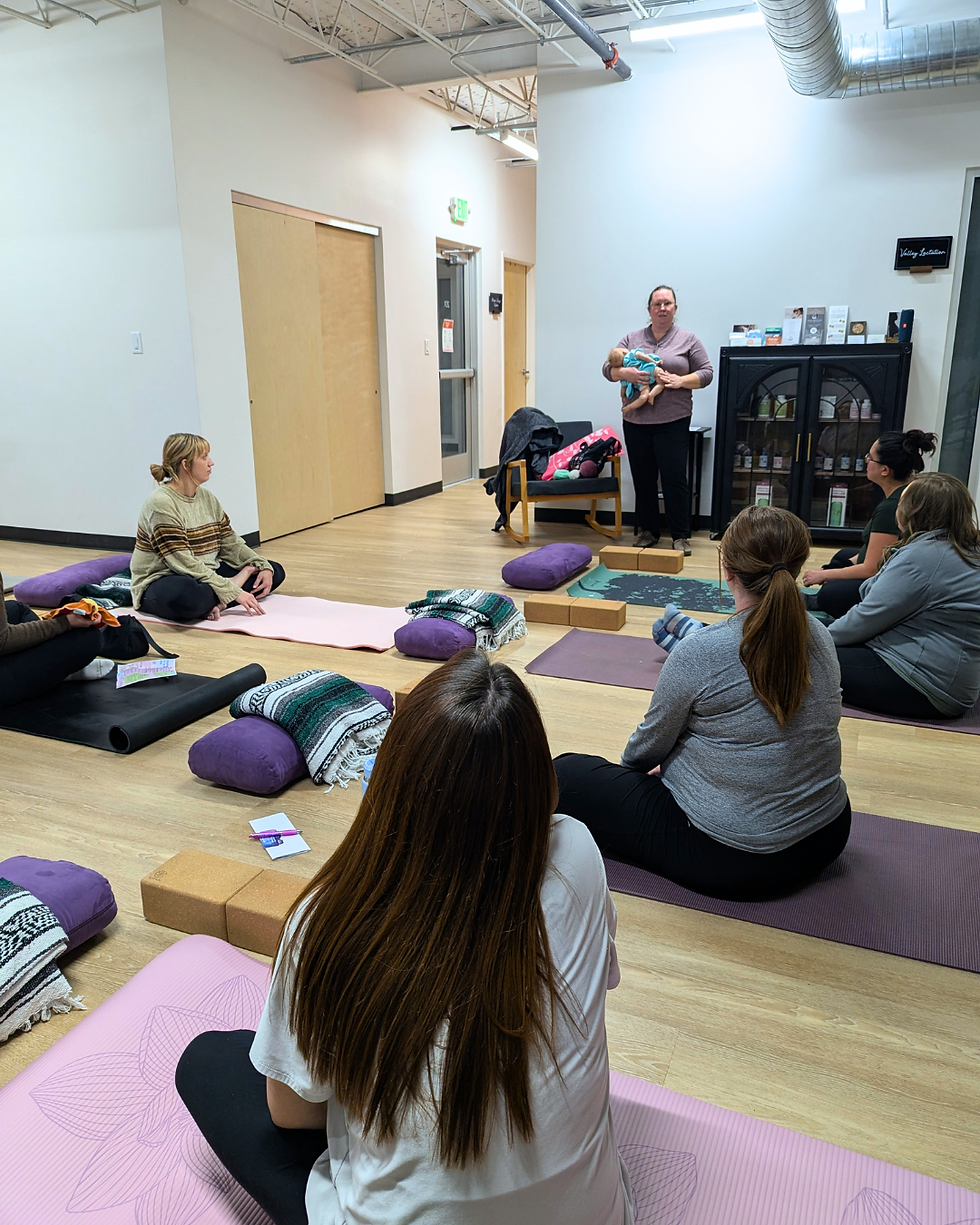
I bring a lactation specialist into every prenatal yoga series because this topic is too important to leave until after birth. Understanding your options before baby arrives means you can make informed choices, communicate your preferences to your care team, and know where to turn if challenges come up.
Before Baby Arrives

If breastfeeding is the path you're planning to take, a breastfeeding class before birth is one of the best investments you can make. Not because you need to have it all figured out in advance, but because knowledge reduces panic when things don't go exactly as expected in those first hours and days.
Here's something I learned from our summer series speaker Kathleen Larson at the Western Slope Breastfeeding Coalition that genuinely surprised me: nipples darken during pregnancy partly because newborns have very limited eyesight and can mostly see contrast. Baby is literally using visual cues to find the breast. The human body is remarkable and slightly wild.
Babies are born ready to nurse. They'll root around, searching for the nipple by smell and contrast, with more instinct than most people realize. Knowing this ahead of time helps you trust the process a little more in those first vulnerable moments.
In the Hospital
If you birth in a hospital, lactation support is generally available to you before you go home. Use it. Those first feeds matter and having skilled hands to help you and your baby find a latch can make an enormous difference in how the early days go.
That said the system isn't perfect. Someone recently shared that after a cesarean birth there was no lactation staff available, likely a staffing issue, and she was on her own for those critical early feeds. This is exactly why learning about latching, positioning, and what a good feed looks and feels like before birth matters. You may not always have someone available in the moment.
Also worth knowing: some people want hands-on support. Please help my baby latch. Others prefer more space to figure it out themselves. Both are completely valid. Knowing your own preference and communicating it to your care team means you're more likely to get the experience you actually want.
A lactation specialist isn't just a resource for those first days. They're available throughout your feeding journey whenever challenges arise.
Reasons to reach out to a lactation specialist
Pain during breastfeeding. Nursing can be intense but it should not be painful. Pain is a signal that something needs adjusting, often the latch. Low milk supply concerns. Oversupply and overactive letdown. Baby not gaining weight adequately. Difficulty latching due to tongue tie, lip tie, or other anatomical factors. Engorgement and blocked ducts. Mastitis. Transitioning between breast and bottle. Finding the right flange size for pumping, which makes a significant difference in comfort and output. Nursing positions for breastfeeding or bottle feeding that reduce strain on both you and baby. Supporting feeding after a NICU stay or other complicated start.
A lactation specialist is not only for people who are struggling with breastfeeding. They are a resource for anyone navigating infant feeding in any form.
A Note on Chiropractic Care
Something worth mentioning here that we'll explore in a future blog: chiropractic care can play a meaningful supporting role in the breastfeeding journey for both mama and baby. Alignment issues in a baby's spine or jaw can affect their ability to latch effectively. Mama Baby Chiro with Dr. Timmie Barc is a local resource worth knowing about. We'll dedicate a full post to chiro care for mama and baby in a future month.
Local Lactation Resources
The Grand Valley and surrounding areas have wonderful lactation support available:

Panika Palmer — Connected Pediatric Therapies
Panika is both an International Board Certified Lactation Consultant and a Speech Language Pathologist, bringing a unique dual perspective to feeding support for babies and families. ADD Infant Feeding group info. connectedpeds.com | 970-639-0491

Jodi Hyatt — Milk of Mothers
Jodi is a Registered Nurse and IBCLC serving primarily the Delta area and St. Mary's Hospital. milkofmothers.com | 970-497-6789
Kathleen Larson — Western Slope Breastfeeding Coalition and Mesa County WIC
Kathleen is an IBCLC and Registered Dietitian with a passion for ensuring every family has access to feeding education and support regardless of their resources. westernslopebfco.org | 970-248-6914
Valley Lactation
Ali Reynolds, IBCLC and the Valley Lactation team provide prenatal education and in-home postpartum lactation support throughout the Grand Valley. valleylactation.com | 970-549-0616
Community Hospital
Outpatient lactation consults and a Breastfeeding Support Group every Tuesday at 11am at the Canyon View Medical Center Conference Room, with the third Tuesday of the month at The Womb Wellness Center. 970-644-3369
St. Mary's Hospital
Outpatient lactation support and a Breastfeeding Support Group Wednesday mornings between 10am and 12pm in the Mt. Garfield Conference Room. 970-298-1993
Offers a Breastfeeding class the last Saturday of the month 10am to 1pm and an Infant Feeding Support Group bi-weekly Tuesdays 4:00-6:00 PM 866-218-5769
The Bottom Line
You don't have to figure out infant feeding alone. Whether your journey goes smoothly or hits unexpected bumps, there are skilled, knowledgeable people in this community who want to help you succeed in whatever way success looks like for your family.
Reach out early. Reach out often. That's what the village is for.



Comments