


The Science of Rest: Why Restorative Yoga is Essential
- Kelsey Fife Duarte

- 1 day ago
- 4 min read

We talk a lot about rest during postpartum. Sleep when the baby sleeps. Nap when you can. Rest is recovery.
All of that is true. But rest is not the same thing as sleep. And understanding that distinction might be one of the most practically useful things you can take into the fourth trimester and beyond.
What Rest Actually Is
In a recent prenatal yoga class I asked the group how they relax. One mama shared that she pretends to nap. She lies down, closes her eyes, doesn't fully fall asleep, but described it as feeling very restful.
I do this too, sometimes with my son. I lie down with him while he naps. I'm not fully asleep but I'm not fully present to the outer world either. A kind of half-nap state where time moves differently and something in my body settles. Sometimes I wish I could actually sleep. But I consistently feel more rested afterward than if I had gotten up and kept going.
That experience has a name and a physiological explanation.
The Nervous System and the Rest Response

Your nervous system operates in two primary states. The sympathetic state, often called fight or flight, is active when you're alert, reactive, and managing demands. The parasympathetic state, often called rest and digest, is active when you feel safe, still, and unhurried.
Most of us spend the majority of our days in a low-grade sympathetic state. Not in crisis, but not fully at rest either. Screens, to-do lists, background noise, the mental load of new parenthood. All of it keeps the nervous system gently activated even when nothing is technically wrong.
Sleep is one way to shift into the parasympathetic state. But it's not the only way. And for a new parent who can't always control when or whether they sleep, knowing other ways to access that rest response is genuinely useful.
What Happens in the Body During Restful States
When the nervous system down-regulates, even without full sleep, real physiological changes occur. Heart rate slows. Blood pressure drops. Cortisol, the primary stress hormone, decreases. The digestive system activates. Tissue repair and cellular restoration happen more effectively. The immune system functions better.
This is not just relaxation in the casual sense. It is biological recovery. And it can happen in a half-nap, in a guided meditation, in a supported yoga pose, or in a few minutes of slow intentional breath.
The pretend nap that mama described in class? Her body was genuinely restoring itself. She just didn't have a framework for understanding why it worked.
Where Restorative Yoga Comes In

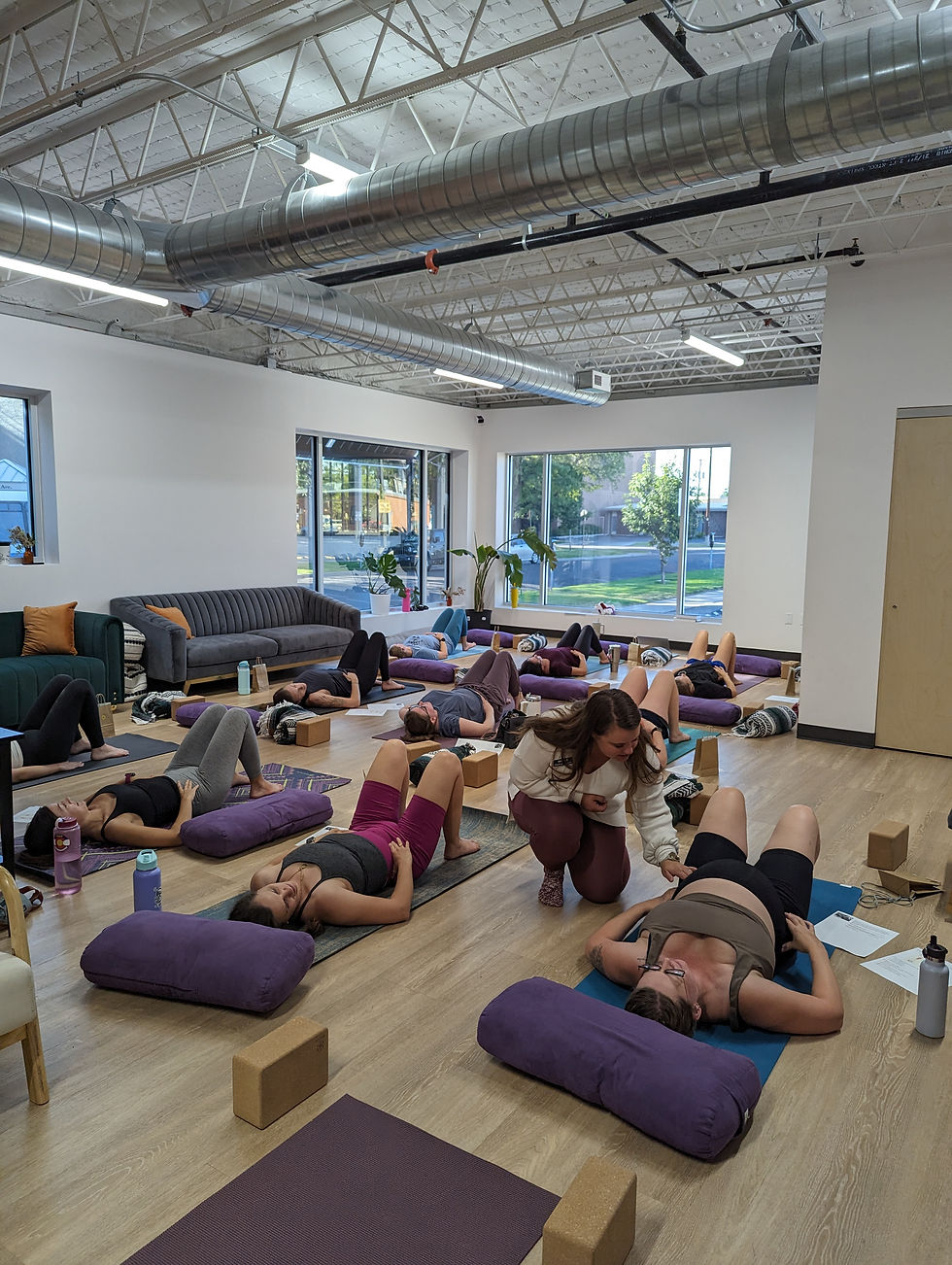
Restorative yoga is a practice specifically designed to down-regulate the nervous system. Not a gentle flow. Not a slow vinyasa. True restorative yoga involves fully supported poses held for extended periods, often five to twenty minutes, where the body is completely passive. Bolsters, blankets, blocks, and props carry the weight so the muscles can fully release.
The result is a sustained parasympathetic response. The nervous system gets a clear signal: you are safe. You can let go. You don't have to hold anything right now.
For a postpartum body that has been through the physical event of birth, the hormonal upheaval of early parenthood, and the relentless demands of a newborn, this kind of deliberate rest is not a luxury. It is part of recovery.
You Don't Need a Full Practice
One of the most accessible restorative poses requires nothing but a wall and a blanket.

Legs Up the Wall: Lie on your back with your legs resting vertically up a wall. Arms relaxed at your sides or on your belly. Eyes closed. Stay for five to fifteen minutes.
This simple inversion reverses the effects of being on your feet, reduces swelling in the legs, and activates the parasympathetic nervous system through a gentle shift in circulation. New parents report it as one of the most instantly effective recovery tools available.
Other options: a supported recline with a bolster under the spine opening the chest. A side-lying pose with a pillow between the knees and one supporting the head. Child's pose with a bolster supporting the torso.
These are not backup plans for when you can't sleep. They are their own form of restoration.
Give Yourself Permission
Most of us have been conditioned to feel like stopping means falling behind. Like resting while the laundry piles up or the dishes sit in the sink is somehow failing. Especially in the postpartum season when the pressure to bounce back, be present, keep up, and hold everything together is relentless.
Rest is not a reward for finishing everything. It is part of the work. Your nervous system does not care whether the house is tidy. It only knows whether it has been given the conditions to recover. Give it those conditions. Give yourself permission to stop, even briefly, even imperfectly, and let your body do what it knows how to do.
The pretend nap counts. The legs up the wall counts. The five slow breaths before getting out of bed counts.
Let it count.
A Final Note
Rest is not a reward for finishing everything. It is part of the work. Your nervous system needs regular opportunities to shift out of activation and into restoration. Building that into your life, even in small ways, is one of the most sustainable things you can do for your long-term health and wellbeing.
The pretend nap counts. The legs up the wall counts. The five quiet minutes with your eyes closed counts.
Let it count.


Comments