


Honoring the Midwife: A Brief History and a Celebration

Next week is National Midwifery Week, October 4th through 10th. It exists to raise awareness of the vital role midwives play in women's health, pregnancy, and childbirth. It also felt like the right occasion to learn something I honestly didn't know much about: the history of midwifery itself.
What I found was both fascinating and, in many ways, not surprising at all.
A History as Old as Birth Itself
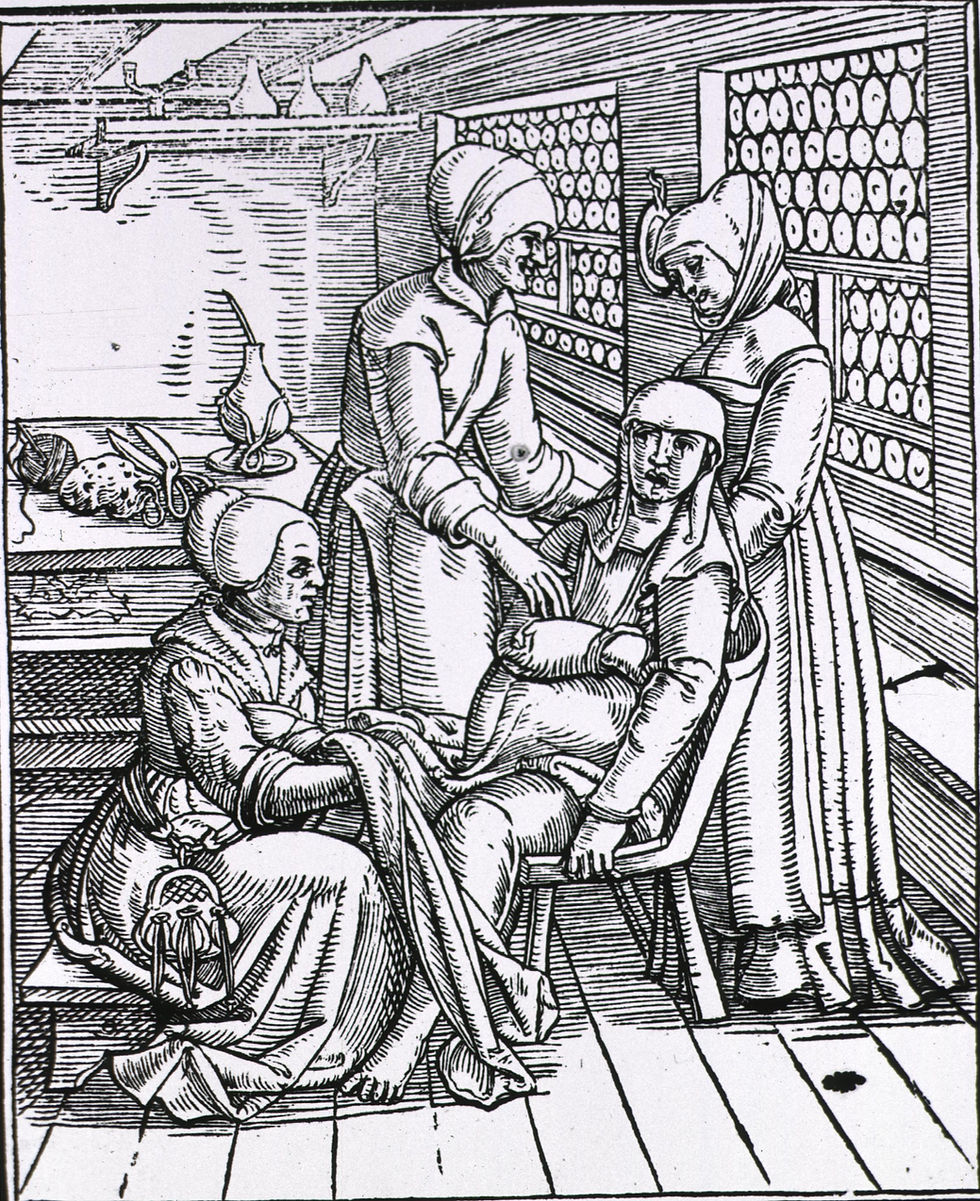
Midwifery may be one of the oldest professions in human history. Some historians trace its roots as far back as the Paleolithic era, though the evidence for that is understandably limited. What is clear is that for most of recorded history, birth was community-based care. Women supporting women. Knowledge passed down through generations, woven together with herbalism, spirituality, and an intimate understanding of the female body.
The word midwife comes from the Old English: mid meaning "with" and wif meaning "woman." To be a midwife is literally to be with woman.
This was not ancient history that existed only in textbooks, as it was the norm in rural communities until relatively recently. My father-in-law was born in a small ranch community in Mexico via community-based birth care. There were no formal clinics or credentials. There was simply Stella, a local woman who was not formally trained, who was the one who showed up to support all the births in their small town. She was the community's midwife because she was trusted, present, and held the practical wisdom of birth.
Cycles of Shift: From Ancient History to Modern Medicine
While we often think of the medicalization of birth as a modern phenomenon, history reveals that the shift away from female-led midwifery has happened in waves across millennia.
In ancient Egypt, female midwives held significant social status, yet over time, male physicians began taking control of complex births and medical papyri. In Greco-Roman society, highly respected midwives (obstetrices) initially led maternal care, but as formal medical systems developed under male physicians like Soranus and Galen, women's autonomous role was gradually restricted. During the Middle Ages and Renaissance, societal control over women's traditional healing knowledge deepened further, often stripping female birth workers of their authority.
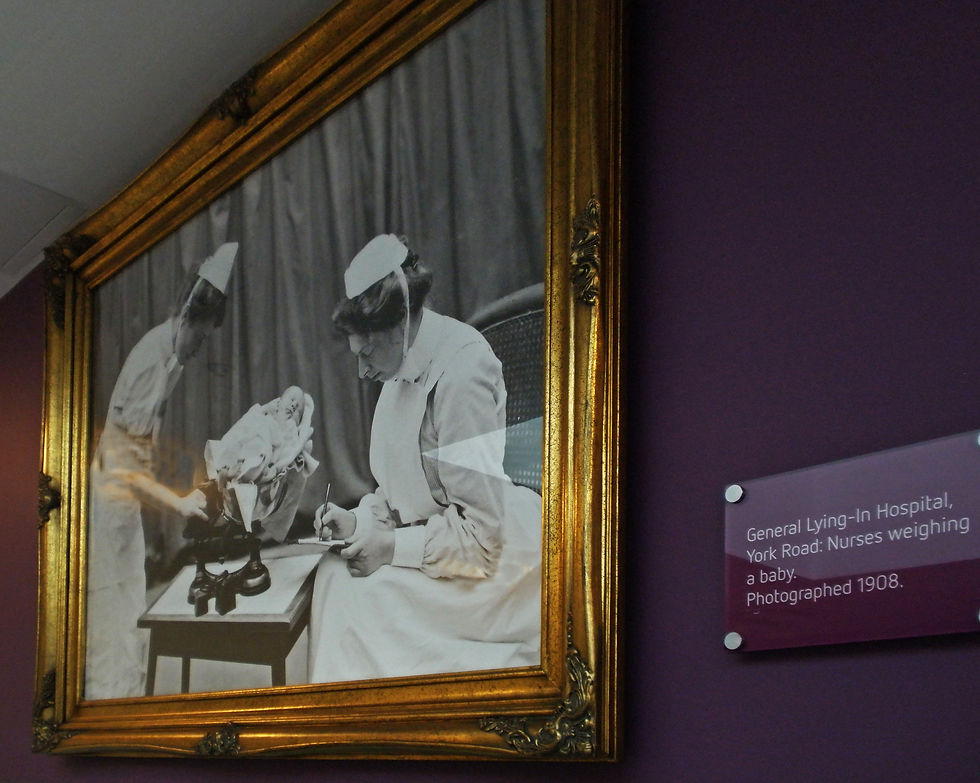
The shift to our current hospital-based model is simply the most recent iteration of this pattern, accelerating rapidly through the 17th to 20th centuries. As male physicians gained exclusive access to university educations and emerging surgical tools, such as forceps, birth moved from home and community spaces into medical institutions.
This transition brought a fundamentally different philosophical orientation toward birth, captured in the language itself.
The word obstetrics comes from the Latin obstare, meaning "to stand in front of."
That distinction is powerful. To be "with woman" implies partnership, presence, and supporting a natural physiological process from alongside the birthing person. To "stand in front of" positions the provider as the primary authority or expert managing an event.
Midwifery approaches birth as a normal, physiological life event that benefits from presence, patience, and minimal intervention unless necessary. Obstetrics approaches birth through a clinical lens prepared to manage medical conditions. Both perspectives have value, but understanding this philosophical difference explains why the two models have coexisted in tension for generations.
By the 1920s, midwifery in the United States had largely merged with nursing, developing into the certified nurse-midwife model we recognize today. Yet, the first official Certified Nurse-Midwife certificates were not awarded until 1994, which reflects how recently the traditional craft was formalized within our modern medical system.
The Types of Midwives

Not all midwives hold the same credential, and understanding the differences is useful when exploring care options:
Certified Nurse-Midwife (CNM): A registered nurse who has completed graduate-level midwifery education and passed a national certification exam through the American Midwifery Certification Board. CNMs are licensed in all 50 states and often practice in hospital and birth center settings alongside OBs. They can prescribe medications and are fully integrated into the formal healthcare system.
Certified Midwife (CM): Trained at the same graduate level as a CNM and takes the same certification exam, but does not hold a nursing license. CMs have the same scope of practice as CNMs but are currently recognized in only select states.
Certified Professional Midwife (CPM): A credential specific to out-of-hospital birth. CPMs specialize in home birth and birth center settings and complete their training through an accredited program or equivalent clinical apprenticeship pathway.
What the Research Says
This distinction extends beyond philosophy into measurable outcomes. The research around midwife-led care is consistent.
Comparative studies on intrapartum care repeatedly show that patients receiving midwifery care experience lower rates of primary cesarean sections and reduced rates of technological interventions for low-risk pregnancies. A systematic review of over 1.4 million pregnancies found that midwife-led continuity models were associated with significant decreases in cesarean deliveries as well as reduced use of epidurals or instrumental assistance.
This applies specifically to low-risk pregnancies. It matters because the cesarean rate in the United States remains higher than what global health organizations consider optimal. Midwifery care offers a grounded, evidence-based approach to supporting healthy, uncomplicated births.
None of this means midwifery care is the only right choice or that obstetric care is unnecessary. Medical intervention saves lives every single day. There are many scenarios where an OB is precisely the right provider and hospital-based interventions are critical. The ultimate goal is matching the level of care to the individual's needs.
The Power of Provider Philosophy

What makes the midwifery model resonate with so many is its focus on autonomy and collaboration. The distinction between "being with" someone versus "standing in front of" them shapes how care is delivered.
When a provider views themselves as a supportive partner rather than the sole authority in the room, discussions around options, risks, and choices naturally open up. It creates a space where the birthing person feels genuinely heard, informed, and empowered to make decisions about their body and baby.
I chose midwifery care for both of my pregnancies: one at a hospital-associated birth center and one at home. Both experiences were distinct, and both taught me something profound about care. Ultimately, the credential on the door matters far less than finding a provider whose philosophy aligns with yours and who respects your intuition.
Happy National Midwifery Week
To every midwife serving families across our communities and region: thank you. The work you do is ancient, deeply human, and essential. It deserves every bit of recognition it receives.

Comments