


The Myth of the "Lonesome Pioneer"
- Kelsey Fife Duarte

- Jan 29
- 2 min read
Updated: Feb 4
Did you know that your nervous system is biologically designed to co-regulate with other people to lower your cortisol levels?
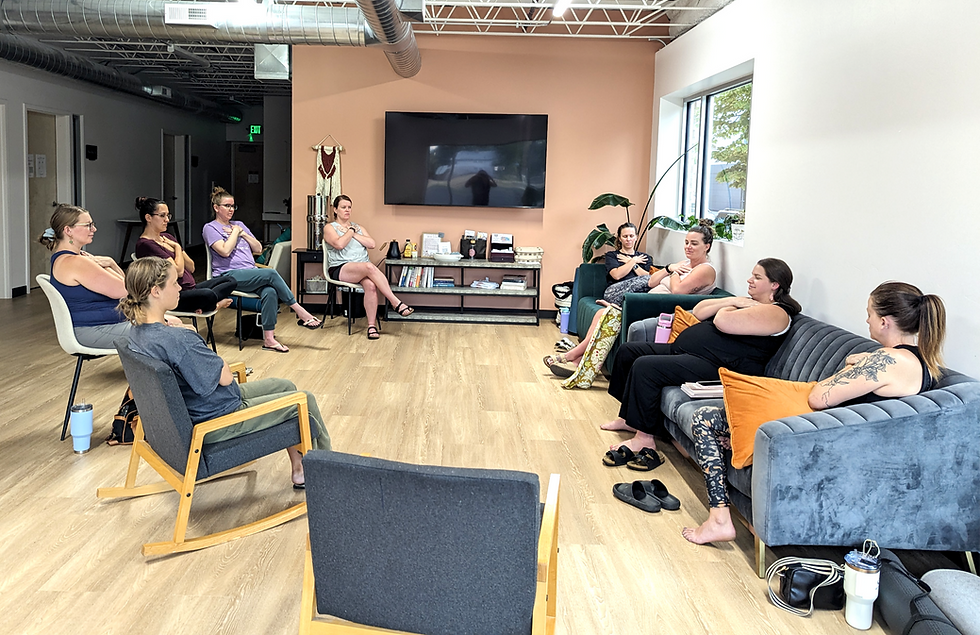
In the West, we pride ourselves on being rugged individuals who can handle everything ourselves. But during pregnancy, the "I’ve got it" mentality can actually trigger a chronic fight-or-flight response. When you feel isolated, your brain perceives it as a threat, which can lead to higher blood pressure and increased anxiety. The loving truth is that your baby isn't just growing in your womb. They are growing in your community.
Try these 4 Community-Connection yoga shifts starting this week to break
the cycle of isolation:

The "Eye-Level" Reach: When you’re feeling overwhelmed, practice a standing wall stretch (hands on the wall, chest melting down). As you do this, consciously visualize one person you can call, not to vent, but just to "be." Then, actually make that call for 5 minutes. This integrates the physical release with a social action.
The "Shared Breath" Practice: Instead of practicing alone at home, take your yoga mat to a local park or a friend’s living room. Even if you don't talk, the simple act of breathing in the presence of another human shifts your brain from "Survival Mode" to "Social Connection Mode." Aim for 10 minutes of shared space.

The "Vagus Nerve" Hum: Isolation often makes us go quiet. Stand in Tadasana (Mountain Pose), place your hands on your heart, and hum a low, steady tone for 5 exhales. This stimulates the Vagus nerve, which governs your rest and digest system. It’s a physical reminder that you have a voice, even when the world feels empty.
The "Village Walk" Stretch: Go for a 15 minute walk in a neighborhood where people are out. As you walk, practice +looking people in the eye and offering a small nod or smile. This micro interaction tells your nervous system, "I am seen, and I am safe."

The Benefit: By intentionally seeking connection, you are lowering the inflammatory markers associated with stress. This creates a calmer environment for your baby’s development, reduces the risk of postpartum depression, and builds the village you will need for a more confident and supported transition into motherhood.


Comments