


Physical Recovery: Gentle Movement for Healing

I want to be upfront about something before we dive in: I'm a yoga teacher, not a pelvic floor physical therapist. This post comes from personal experience, my yoga training, and a genuine belief that every postpartum person deserves better information than "this is just how it is now."
The Reality of Postpartum Pelvic Health

Pelvic floor dysfunction after birth is incredibly common. Studies suggest that up to one in three women experience urinary incontinence after having a baby. Pelvic organ prolapse affects approximately 50% of women who have given birth, though many never seek treatment. Pain with sex, pelvic pressure, and core weakness that persists long after the six-week clearance are experiences shared by a significant number of postpartum women.
Common. But as Pelvic Floor Physical Therapist Dr. Nicole Fraser puts it so well: common is not the same as normal.
Too often pregnant women are told to wait until after birth for issues to resolve. And postpartum women are told to just expect these changes as part of motherhood. That is not good enough. These are treatable conditions. You deserve real support.
My Experience
I knew going into my first pregnancy that I had a weak core. That's different from having pelvic floor dysfunction but they're related enough that I paid attention.
Fortunately I didn't experience incontinence, prolapse, or pain. But I still made an appointment with a pelvic floor PT right around my six-week checkup. She assessed me, gave me specific strengthening exercises, and I did them consistently. The result was that I came back stronger than I went into pregnancy.

How did I know? I got back into yoga arm balance and inversion training through Yogi Flight School, a training I genuinely loved. And my ability to hold crow pose felt more effortless than it ever had before. That deep core connection was doing its job.
I only knew to see a pelvic floor PT because of my yoga teacher training. It's becoming more common knowledge but there's still a significant gap between what postpartum women need and what they're routinely offered at a six-week checkup.
When to Start and Where the Confusion Comes From
Here's where I want to be honest: the guidance on this is genuinely contradictory and I'm not the right person to tell you exactly when to start specific exercises. The traditional recommendation from yoga training and general postpartum guidance is to wait until after your six-week clearance. But pelvic floor PTs are increasingly posting about movements that are safe to begin much earlier.
The most consistent first step across almost every resource is diaphragmatic breathing. The same deep belly breath we practiced throughout pregnancy. In the immediate postpartum period this is your foundation.
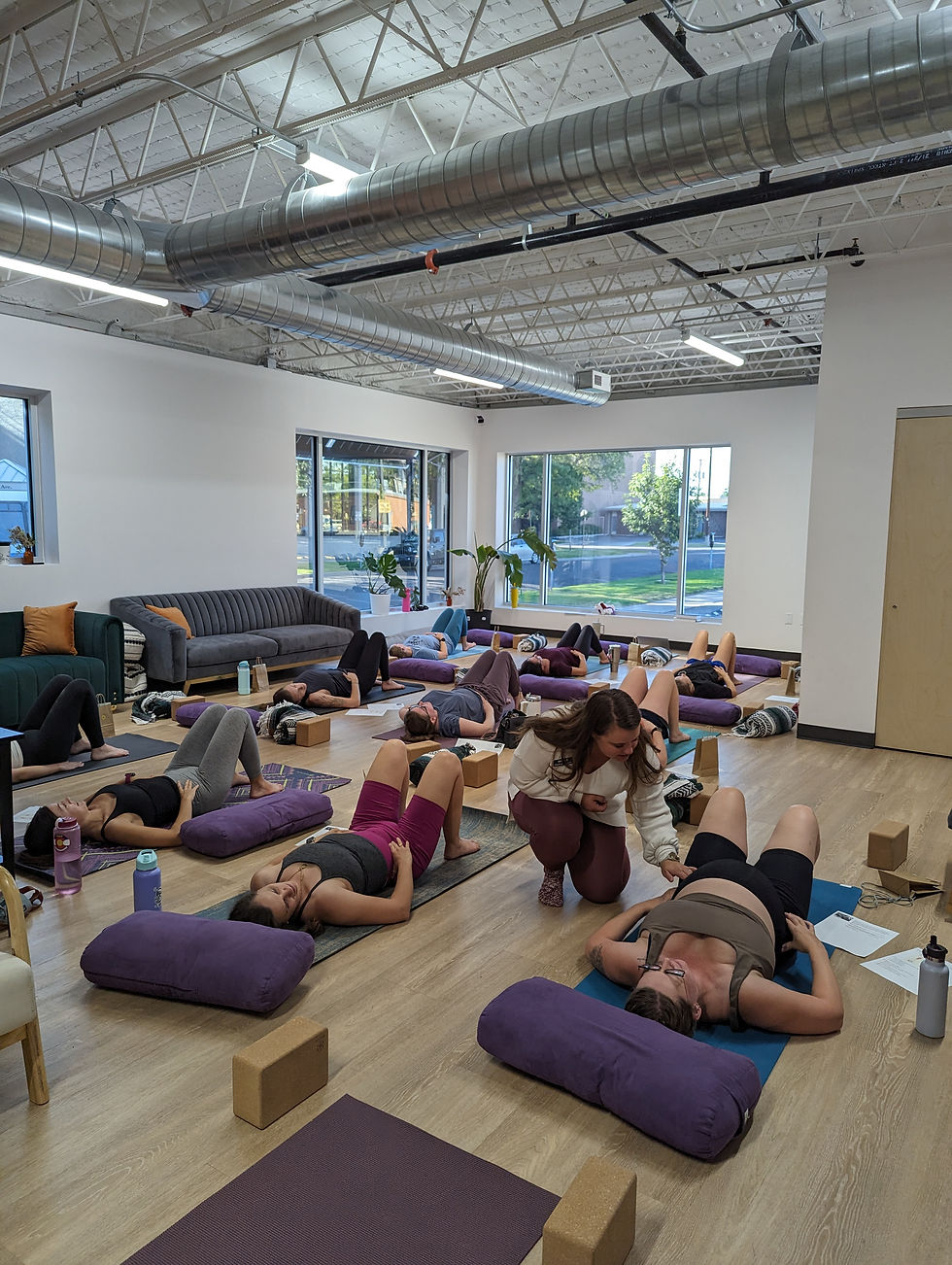
From there gentle movements that engage the deep core, specifically the transverse abdominis, are typically introduced. Think movements on the floor: gently pressing the low back down, slowly lifting the feet, progressing toward movements like the dead bug. MamasteFit is a resource I like for postpartum movement guidance if you want to explore further.
See a pelvic floor PT before starting any postpartum exercise program rather than relying on general guidance online. They can assess where you actually are and give you a plan specific to your body and your birth experience. General guidance is a starting point. A professional assessment is the real thing.
This Is Not About Bouncing Back
The goal here is not to get your body back. You had a baby. You have a new body. It is remarkable. The goal is to build a strong foundation for the decades of life ahead of you.
Not perfection. Not a timeline. Not a comparison to where you were before. Just consistent, compassionate care for a body that did something extraordinary.
Keep Taking Care of Yourself
One thing I wish someone had told me: the initial postpartum recovery is just the beginning, not the finish line.
As my son got more active and mobile I found it harder to prioritize my own movement practice. Life takes over. And maybe the pelvic floor challenges I experienced during my second pregnancy would have happened anyway. But consistent care over time makes a difference. I also ran a half marathon at fifteen weeks on slick rock, which probably didn't help. Hindsight.
The six-week mark is a starting point, not a finish line. Keep showing up for your body beyond the initial recovery window. Your pelvic floor will thank you for it years from now.
When to See a Professional

If you are experiencing any of the following, please reach out to a pelvic floor physical therapist rather than waiting to see if it resolves on its own:
Leaking urine when you sneeze, cough, jump, or laugh. A feeling of heaviness or pressure in the pelvis. Pain with sex after you've been cleared for intercourse. Ongoing lower back or hip pain. Any sensation that something is falling out or bulging.
These are not things to accept as permanent. They are treatable.
Two Pelvic Floor PTs right here in the Grand Valley who are wonderful resources:

Dr. Nicole Fraser — Monument Physical Therapy.

Becky Montag — Montag Physical Therapy.
Both have been part of our prenatal yoga series and both bring exceptional knowledge and compassion to this work.


Comments